Cats communicate with a complex variety of body language, vocalization, and scent signals that humans can’t detect. A cat’s body language can tell us a lot about what they are thinking or intending to do. Learning how to understand cat language will help us better understand what they want or need.
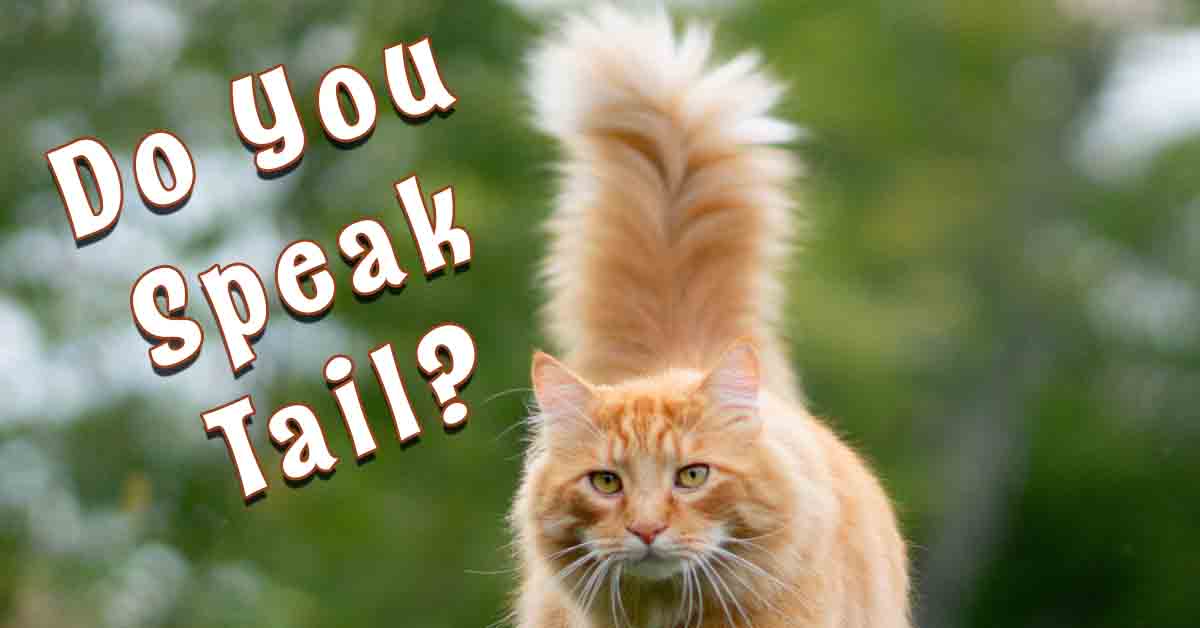
A familiar phrase claims the eyes are the windows to the soul, but in cats, it’s their tail position that provides insight into what a cat may be feeling. Tail cues are the perfect starting place to learn how to communicate with a cat.
Dr. Alison Gerken, DMV, Clinical Behavior Medicine at the Florida Veterinary Behavior Service has provided some tips for understanding cat tail language.
• Thrashing or thumbing tail – irritated, annoyed, or angry
• Quivering tail – excited to see you or another cat (could also be urine marking)
• Twitching the end of the tail – hunting, playing, or mildly irritated
• Wrapping the tail around your leg – friendly greeting
• Tall, straight tail – friendly
• Question mark or hooked tail – happy invitation to interact
• Puffed up tail – frightened
• Tail wrapped around their own body – defensive, in pain, or not feeling well
The tail may be the most expressive part of a cat’s body language. Getting to know each cat’s individual style and ways of communicating can lead to rewarding and lifelong friendships. One thing is certain: dog tail rules do not apply to cats.
Source:
Gerken A. DVM. How to read your cat’s tail language. PetMD.com. [cited: 2021 Sept 13]. Available from: https://www.petmd.com/cat/behavior/evr_ct_what-does-it-mean-when-a-cat-wags-tail